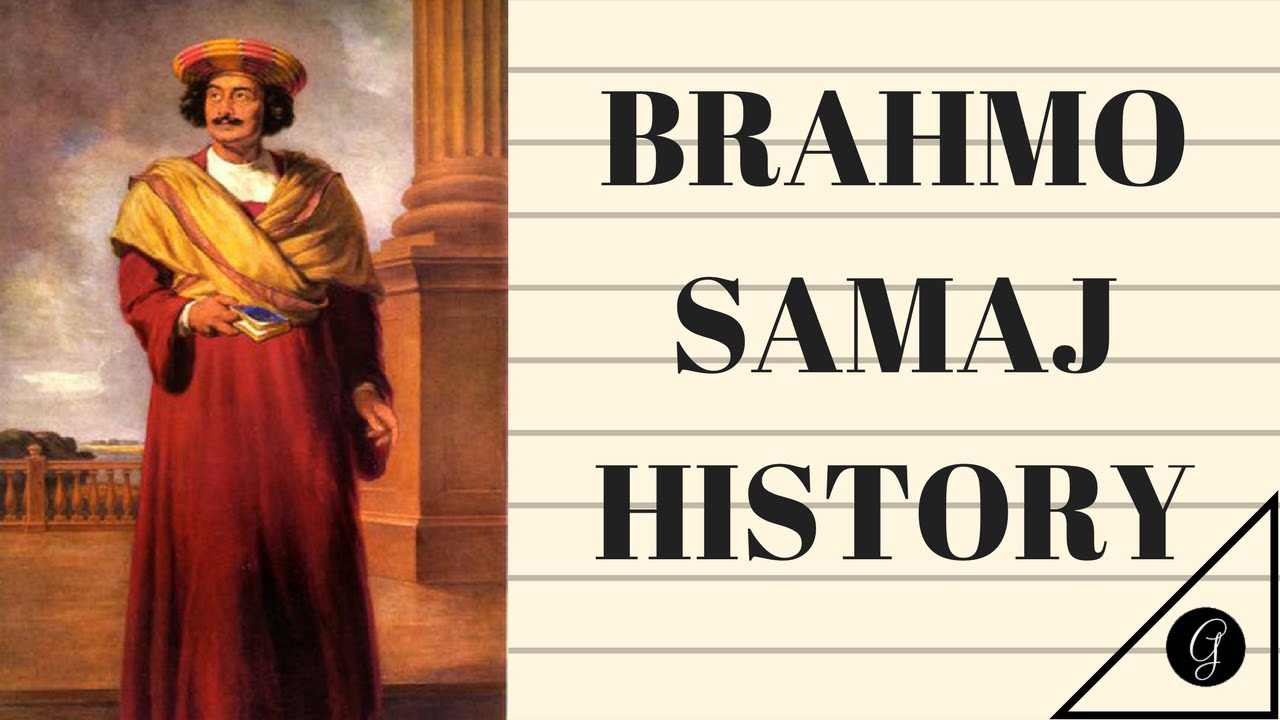
The first phase of its history is intimately linked up with the career of its founder Rammohun Roy (1772 – 1833). The Brahmo Samaj which was launched into its eventful career on August 20, 1828, gave a concrete expression to Rammohun’s concept of universal worship. Tarachand Chakravarti one of the leaders of the “Young Bengal” group was appointed the secretary of the organisation. Weekly service was held originally, every Saturday evening; later it was transferred to Wednesday, a practice which has been retained to this day at the Brahmamandir of Tagore’s Shantiniketan. It consisted of three successive parts, viz. recitation of the Vedas by Telegu Brahmins in the closed apartment exclusively before the Brahmin members of the congregation, reading and exposition of the Upanishads for the general audience, and singing of religious hymns. This would correspond exactly to the reading of the Bible, the sermon and the hymns of Christian worship, and on this point Rammohun’s previous Unitarian contacts had certainly been of considerable help by providing him with a model of congregational worship which was alien to the spirit of Hinduism. The parallelism however was confined exclusively to the outward form. The contents of Rammohun’s universal worship were thoroughly Hindu in character. The reading of the vedas exclusively before the Brahmin participant does not apparently accord well with the universal and non-sectarian ideals of the new church as set forth in its Trust Deed. But the only custodian of Vedic rituals in Calcutta at that moment was the orthodox Telegu Brahmin […]







Recent Comments